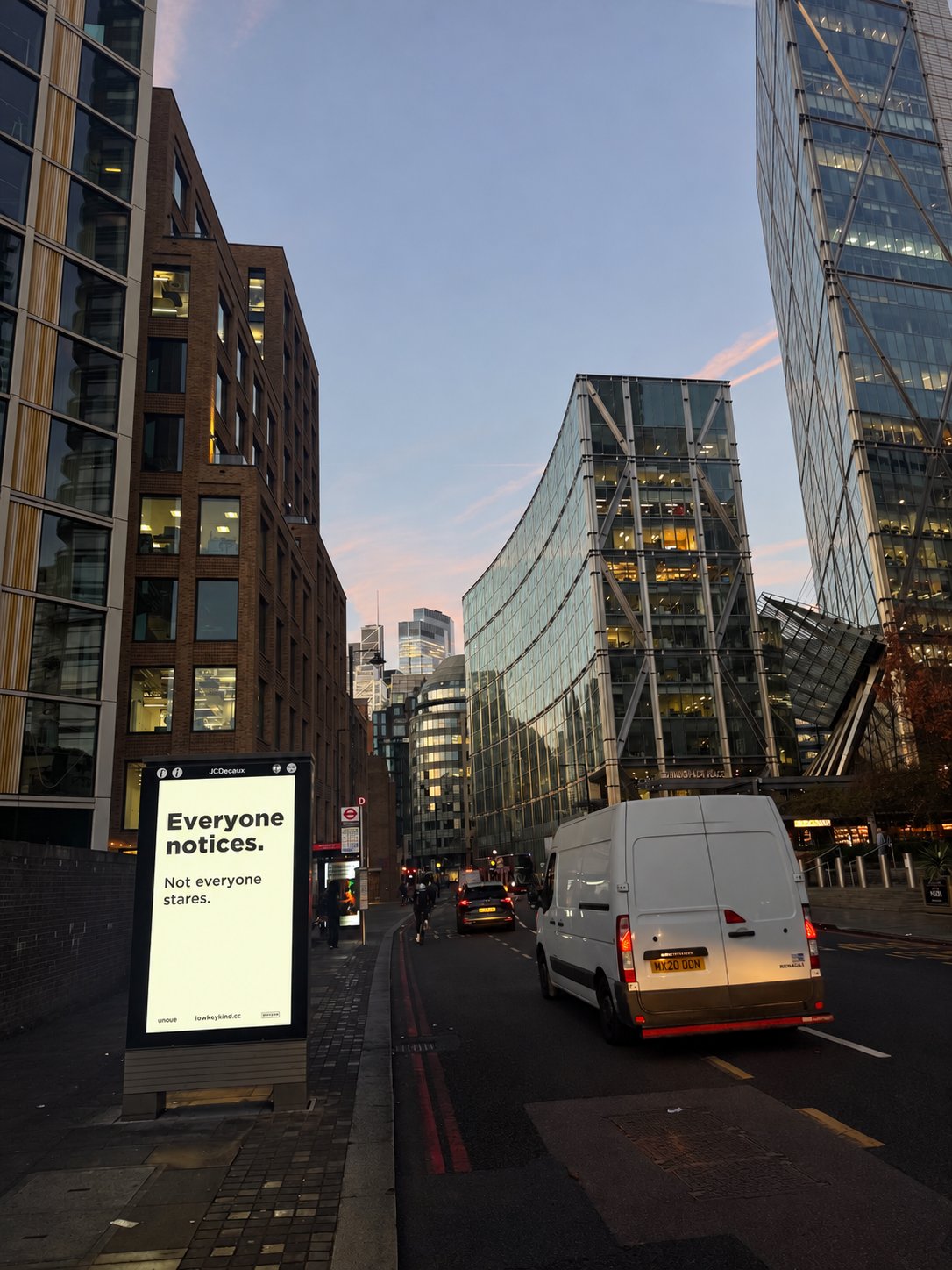
Take Over
A behaviour change campaign for teenagers learning to manage asthma, and for parents learning to let them.

(Details)
(Challenge)
They asked for awareness. Nobody was short of information.
An awareness campaign for 12 to 17 year olds. Two thirds of asthma deaths are preventable, and the pattern behind most is the same: too little of the daily preventer, too much of the blue reliever. Teenagers could already explain all of it. It sat on the shelf anyway.
(Goal)
Change the behaviour, not the level of knowledge.
If they know and still do not do it, knowing was never the missing part. The job was to make managing asthma mean something a fifteen year old actually wants, and to give their parents a safe way to step back.
(Result)
A rank system that turns management into independence.
Three ranks, each buying a real freedom, negotiated and signed by both sides. A structured handover for parents. And a content system where the campaign is teenage life, not the condition.
The medicine has worked for decades. Four people a day still die from asthma.
(What the brief assumed)
So the campaign wrote itself: explain why the preventer matters, show the consequences, tell them what to do. Except it gets skipped alone, behind a closed door, with nobody watching. Not embarrassment. Not ignorance.
(01 · What an inhaler means at fifteen)
I stopped looking at the inhaler as a medical device and started looking at it as a cultural object. On screen it belongs to Piggy, Milhouse, Carl Wheezer. At the end of The Goonies, Mikey throws his away as proof he’s grown up.
But the culture is only half of it. The other half is at home. A parent remembers it, packs it, checks the counter, asks again on the way out of the door. Years of it. So by fifteen the inhaler doesn’t mean ill.
It means being the kid whose parents still manage their asthma.
No health message competes with that. Health is abstract and thirty years away. Being managed is happening at breakfast. It didn’t need to make asthma more frightening. It needed to make managing it mean something different.
(02 · The idea)
Take Over
Same object. Opposite meaning.
Stop asking teenagers to care more about their health. Connect it to what they already want: independence. TAKE OVER turns asthma from something managed around the teenager into something managed by them. The inhaler stops being evidence their parent still has to look after them, and becomes evidence they’re ready to look after themselves.
You don’t move up a rank because another birthday passed. You move up by showing what you can handle: taking the preventer, knowing where the inhaler is, spotting when symptoms change, knowing when to ask.
(03 · The ranks)
Rank 01
Trainee
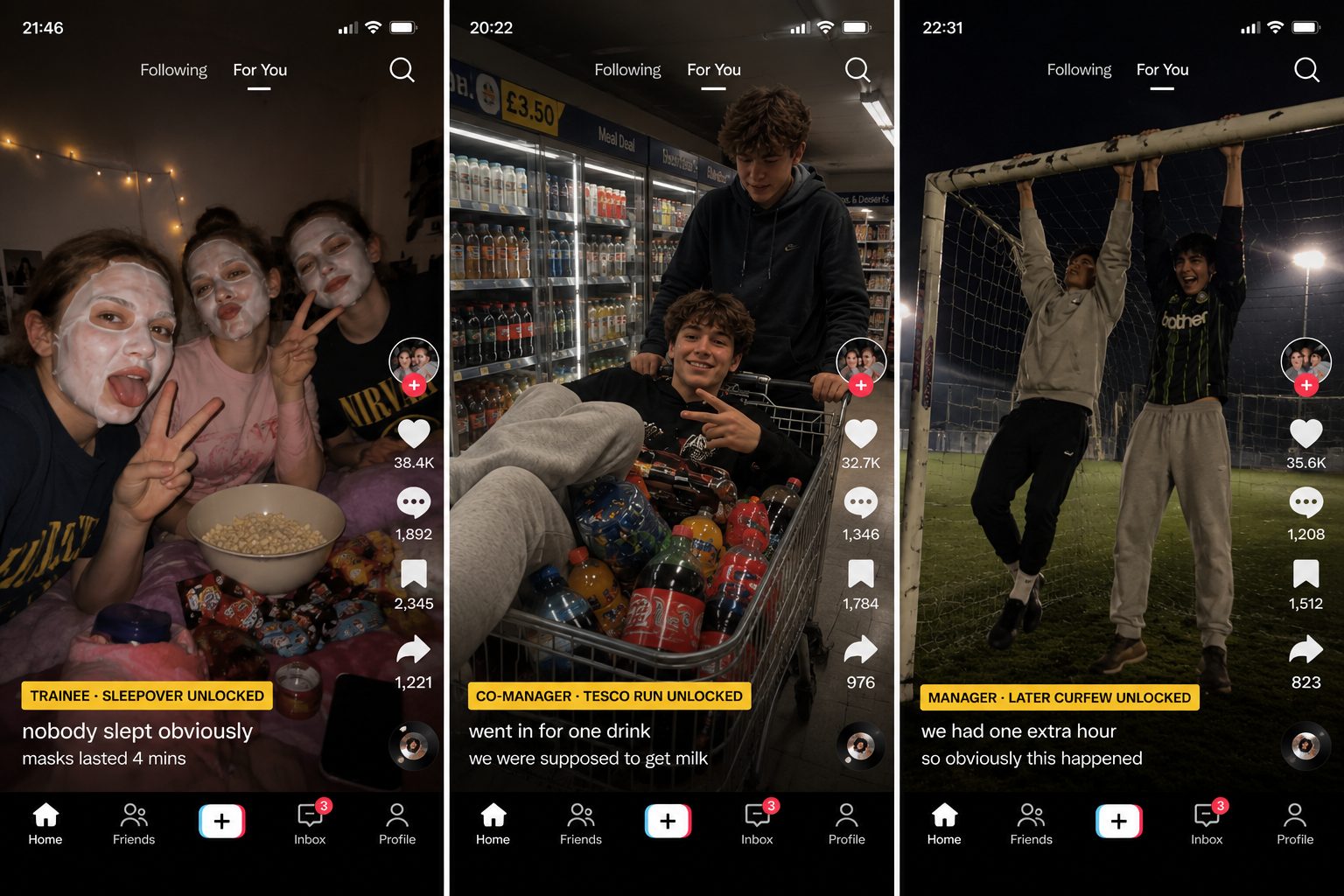
Your parent runs it with you. You learn the kit, the plan, the signs. Buys a sleepover.
Rank 02
Co-manager
You run it. They check in on a schedule, not on a whim. Buys a later curfew.
Rank 03
Manager
It’s yours. They’re named on the back as backup. Buys a gig, then a festival.
For the parent
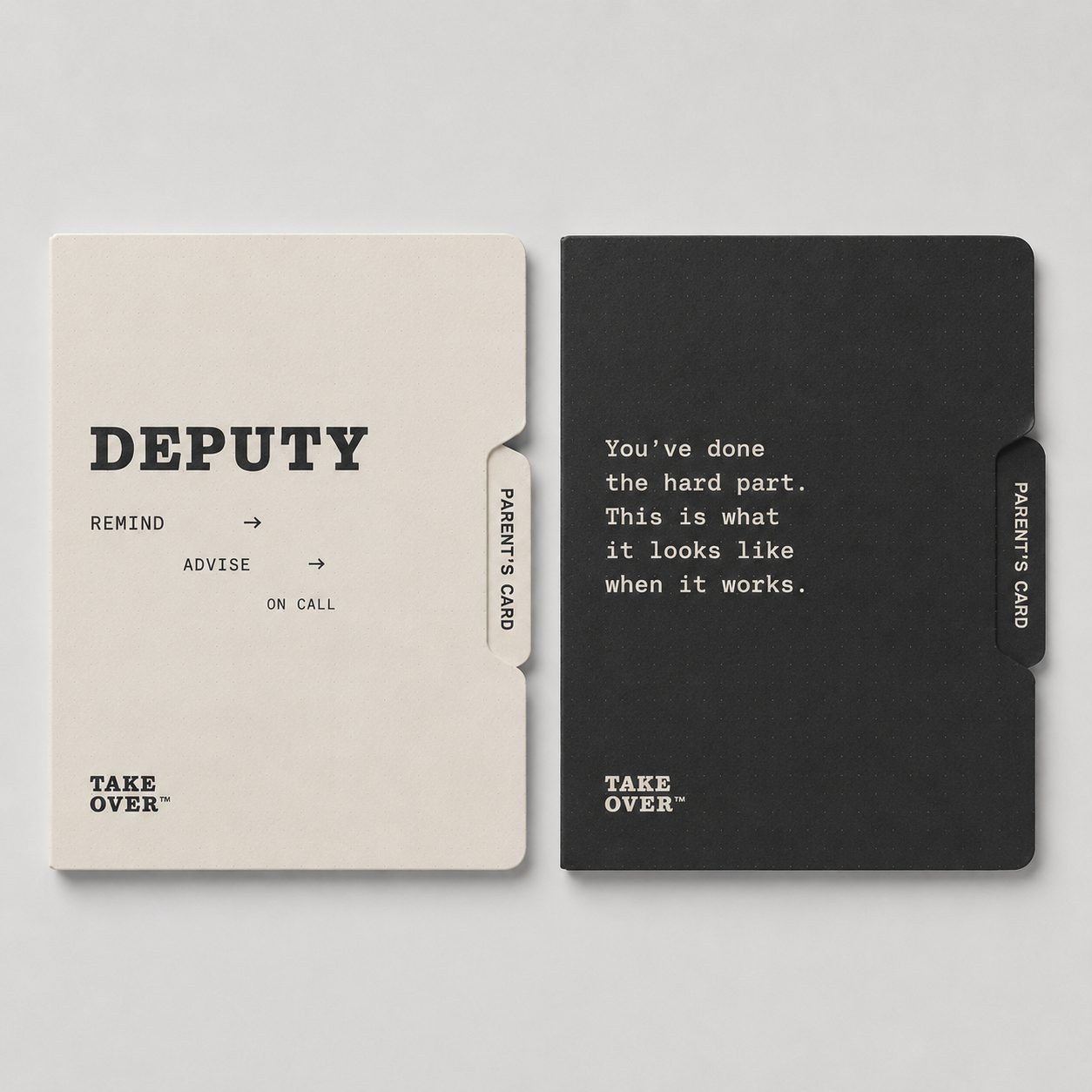
Deputy
Remind, advise, stay on call. A structured handover: agreed steps, agreed evidence, agreed freedoms.

The parents were never the enemy. They were frightened.
(04 · A system for parents too)
Years of remembering the medication, carrying the risk if something got missed. Most don’t want to be reminding a seventeen year old about an inhaler. They want to know they can stop. It gives them evidence instead of reassurance.
(05 · The camera roll)
Blurry, badly framed, caught mid-motion. The blur isn’t a filter. It’s the point: it looks recognised, not advertised at. And it shows what managing asthma buys, not the condition. The kickabout, the wandering, the gig, being somewhere with no parent next to you.
The inhaler stops being the thing that interrupts teenage life. It’s the thing that makes more of it possible.
The parent imagery uses the same camera roll with a different centre of gravity: parents holding their teenagers like babies, keeping them close even though the kid is nearly as big as them. Empathy, not judgement. The message isn’t stop protecting them. It’s: you don’t have to let go all at once.

(Project gallery)

Find why people aren’t doing it. Then build the thing that makes them want to.
annaliisa@tinyforce.ccThe diagnosis, and the creative direction to make it real. Response to a healthcare brief, concept stage, not run.