Abington Woods
A woodland CIC with no money, twenty minutes from some of the richest companies in Britain.

(Details)
(Challenge)
They asked for a pitch deck.
The plan was grants.
They had the woods and Patchwork Village, the community programme they cared about: forest school, family days, youth groups, local events. What they didn’t have was a commercial plan. A good deck might have got them one grant. A few months later they’d need another. Grant funding is one no away from having nothing.
(Goal)
Stop asking for the money.
Earn it.
Grant funding is one no away from having nothing. The job was a commercial model they would actually run, and a way to make selling to corporates feel like protecting the woods rather than selling out.
(Result)
Two brands, four products
and a system for earning it.
Abington Woods generates the income, Patchwork Village delivers the mission, and one rule keeps them in that order. Eighteen paid days a year to stop asking.
The money wasn’t missing.
It was next door.
(The brief)
They asked for a pitch deck. Something good enough to go out and ask for money with. That is one no away from having nothing, so I looked at what was around them first.
(01 · What I found)
They’re just outside Cambridge, surrounded by pharmaceutical and technology companies with budgets for offsites, leadership, ESG and employee wellbeing. And the people working in those companies increasingly want the one thing their offices can’t give them: a day with no screens, no noise and no signal.
Comparable woodland venues charge between £140 and £180 a head. Twelve corporate days, four private dinners and two planting days would match what they’d been applying for in grants.
Eighteen paid days a year to stop asking.
(02 · The problem)
None of that was hard to work out. Which meant it wasn’t the problem. The problem was that they’d never go and get it.
They’re not corporate people. Say sell woodland retreats to a pharmaceutical company and they hear sell-out. An organisation that thinks it’s selling out prices apologetically, promotes it reluctantly, and quietly lets the whole thing die.
The behaviour that
needed changing wasn’t
the customer’s.
It was theirs.
(03 · The idea)
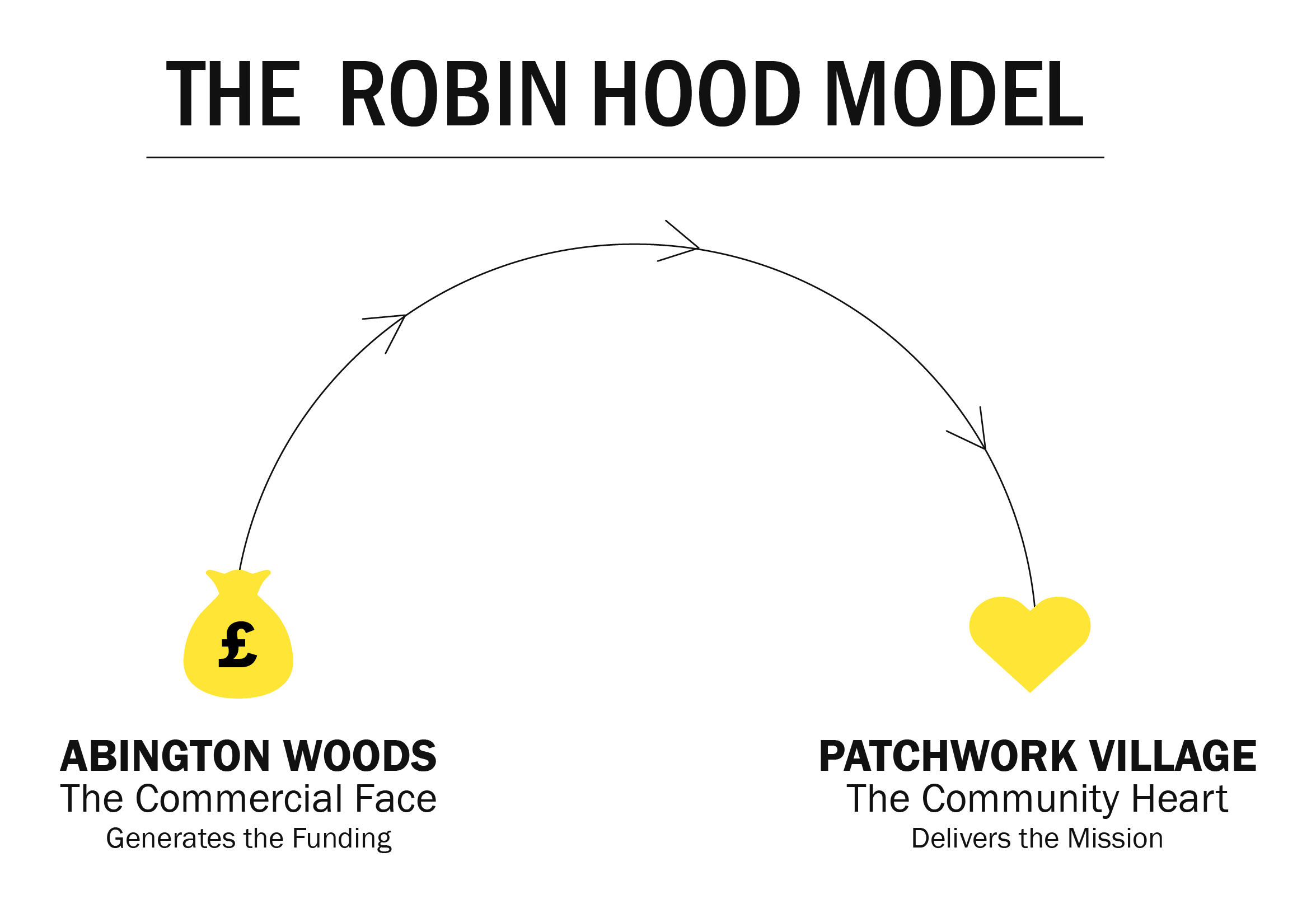
I didn’t take them a business case. I took them Robin Hood.
Take from the rich.
Fund the thing you love.
Nothing about the commercial plan changed. What changed was what agreeing to it meant. Selling corporate days stopped being a compromise to defend and became the most protective thing they could do for the woods. And they’re the ones doing the taking.
One rule holds it in place: the corporate work exists to pay for the community work. If it ever runs the other way, it’s gone wrong.
(04 · Two brands)
The split had to be visible. One organisation offering both corporate retreats and community forest school looks confused, or makes the community side look commercial. Two identities make the model obvious: one earns the money, the other puts it to work.
Brand 01
Delivers the mission
Patchwork Village
Grow wild
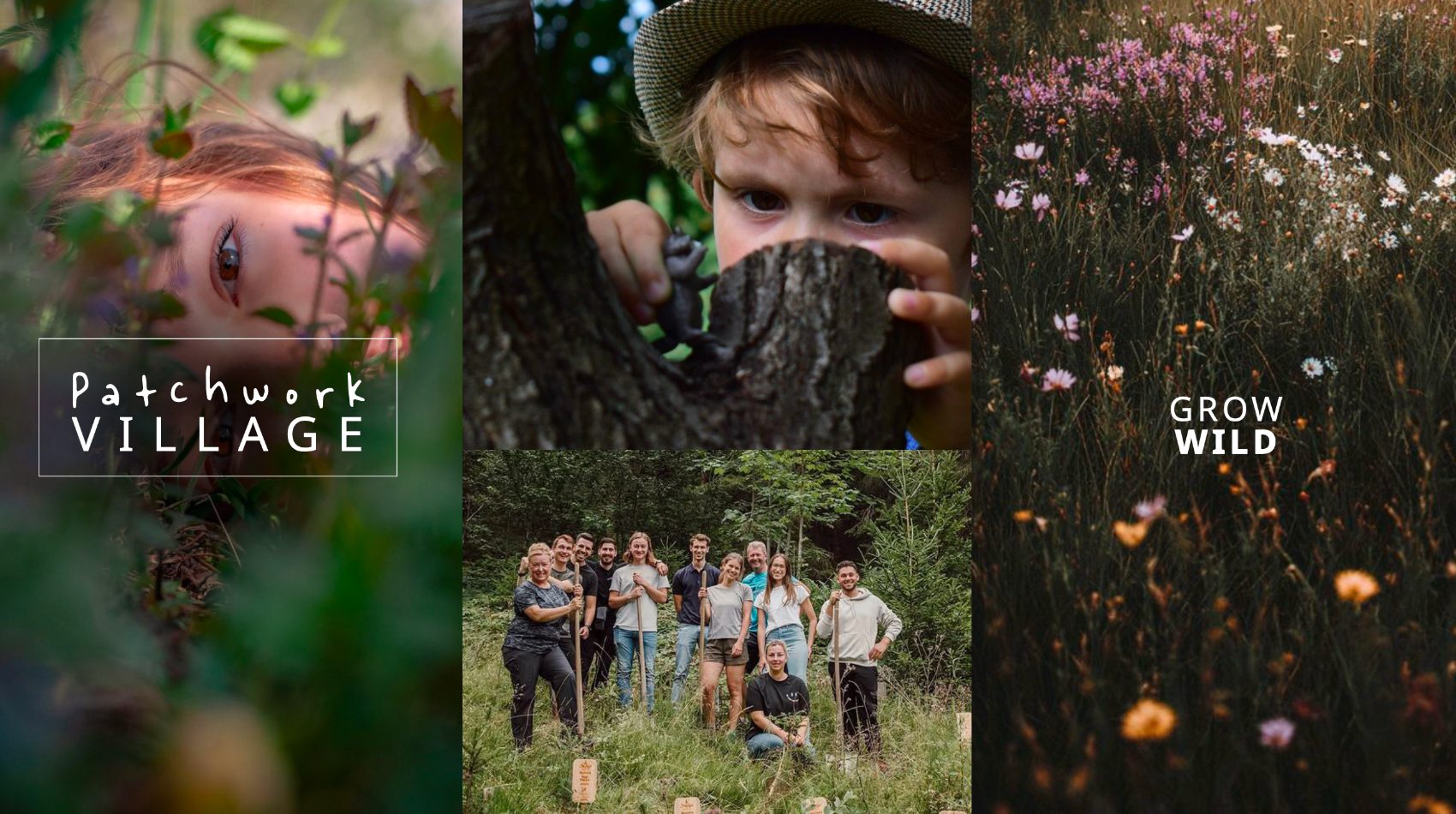
Patchwork Village had a name and very little built around it. I made it a brand: handwritten, muddy, made by hand, a bit wild. Grow wild covers the family and community side: forest school, youth groups, community days, ceremonies, local access.
Brand 02
Generates the funding
Abington Woods
The antidote to the city
The commercial side didn’t exist, so I made it. Quiet, premium, phone-free. Designed as the opposite of everything its customers are leaving behind.
(05 · Four products)
Product 01
The Deep Work Strategy Retreat
A boardroom with no walls, noise or signal.
Product 02
The Secret Woodland Dinner
An exclusive, off-grid dining experience.
Product 03
The Legacy Tree Planting Day
A tangible ESG activity with something real left behind.
Product 04
The Resilience Leadership Programme
Leadership lessons from how woodland adapts, survives and grows.
They got two brands, four products and a system for earning it instead.
(06 · Where it got to)
Each product has its own audience, proposition, experience and reason to buy. Plus both identities, the website concepts and the sales materials to take it to market. They asked for a deck to help them ask for money.
Find why people aren’t doing it. Then build the thing that makes them want to.
annaliisa@tinyforce.ccThe diagnosis + the creative direction to make it real. One week to find the problem. Then the commercial model, the identities and the products to answer it.